
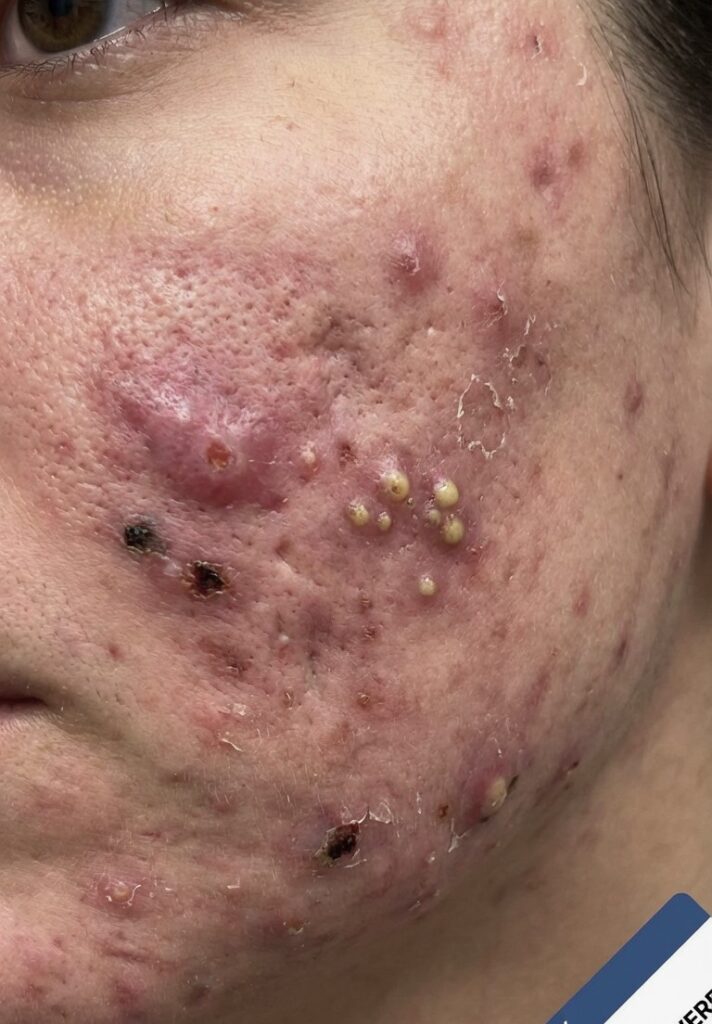
The image shows a case of inflamed, severe acne with pustules, nodules, redness, and post-acne marks. This condition is commonly linked to Acne Vulgaris, one of the most widespread skin issues affecting both teenagers and adults. If not treated properly, it can lead to permanent scarring, skin damage, and emotional distress.
This detailed SEO-optimized article will help you understand the causes, symptoms, treatment options, and best skincare practices for managing severe acne.
What Is Severe Acne?
Severe acne is a more advanced form of acne where the skin develops:
- Painful red bumps (nodules)
- Pus-filled lesions (pustules)
- Deep cysts under the skin
- Scabbing and crusting
- Visible pores and acne scars
Unlike mild acne (blackheads and whiteheads), severe acne penetrates deeper into the skin and often requires medical treatment.
Causes of Severe Acne
Understanding the root cause is key to effective treatment. The most common causes include:
1. Excess Oil Production (Sebum)
Your skin produces oil to stay hydrated. However, too much oil can clog pores and trap bacteria, leading to inflammation.
2. Bacterial Growth
A bacterium called Cutibacterium acnes grows inside clogged pores, causing infection and pus formation.
3. Hormonal Imbalance
Hormones play a major role, especially:
- During puberty
- Menstrual cycles
- Pregnancy
- PCOS (Polycystic Ovary Syndrome)
4. Dead Skin Cell Buildup
When dead skin cells are not shed properly, they block pores and trigger acne breakouts.
5. Poor Skincare Habits
- Using harsh products
- Not cleansing properly
- Over-washing or under-washing
6. Diet and Lifestyle
- High sugar intake
- Dairy products (in some cases)
- Stress
- Lack of sleep
Symptoms Visible in the Image
The image clearly shows signs of advanced acne:
- Yellow pus-filled pimples
- Red inflamed skin
- Dark scabs (healing lesions)
- Enlarged pores
- Skin peeling and dryness
- Post-inflammatory hyperpigmentation (dark spots)
This indicates both active infection and healing damage, which requires careful treatment.
Types of Acne Seen
1. Pustules
Raised bumps filled with pus, often painful and red.
2. Nodules
Hard, deep lumps under the skin that don’t come to a head.
3. Cystic Acne
Severe, painful acne filled with pus deep inside the skin.
Risks of Ignoring Severe Acne
If left untreated, severe acne can lead to:
- Permanent acne scars
- Dark spots (hyperpigmentation)
- Skin infections
- Emotional stress and low confidence
Best Treatment Options
1. Topical Treatments
These are applied directly to the skin:
- Benzoyl Peroxide – kills bacteria
- Salicylic Acid – unclogs pores
- Retinoids – boost skin cell turnover
2. Oral Medications
For severe cases, doctors may prescribe:
- Antibiotics (to reduce bacteria)
- Hormonal therapy (for women)
- Isotretinoin (for cystic acne)
⚠️ Always consult a dermatologist before taking oral medication.
Skincare Routine for Severe Acne
A proper routine can significantly improve your skin:
Morning Routine
- Gentle cleanser (non-comedogenic)
- Lightweight moisturizer
- Sunscreen (SPF 30+)
Night Routine
- Cleanser
- Acne treatment (benzoyl peroxide or retinoid)
- Moisturizer
Do’s and Don’ts
✅ Do:
- Wash face twice daily
- Use clean pillowcases
- Stay hydrated
- Follow a consistent routine
❌ Don’t:
- Pop or squeeze pimples (can worsen infection)
- Use harsh scrubs
- Apply too many products at once
- Ignore severe symptoms
Natural Remedies (Supportive, Not Replacement)
While medical treatment is important, some natural remedies may help:
- Aloe Vera – reduces inflammation
- Tea Tree Oil – antibacterial (use diluted)
- Honey – soothing and healing
⚠️ These are supportive treatments, not a cure for severe acne.
Diet Tips for Clear Skin
What you eat affects your skin:
Eat More:
- Fruits and vegetables
- Omega-3 foods (fish, walnuts)
- Water
Avoid:
- Sugary foods
- Fast food
- Excess dairy (if it triggers acne)
When to See a Doctor
You should consult a dermatologist if:
- Acne is painful and severe
- Home treatments are not working
- Scarring is developing
- Acne is affecting your confidence
Prevention Tips
Preventing acne is easier than treating scars:
- Keep skin clean but not over-washed
- Use oil-free products
- Manage stress
- Maintain a healthy diet
- Avoid touching your face frequently
Conclusion
The image reflects a serious case of Acne Vulgaris that requires proper care and possibly medical treatment. Severe acne is not just a cosmetic issue—it is a skin condition that needs attention, patience, and the right approach.
With consistent skincare, proper treatment, and healthy habits, you can control acne and improve your skin over time.