
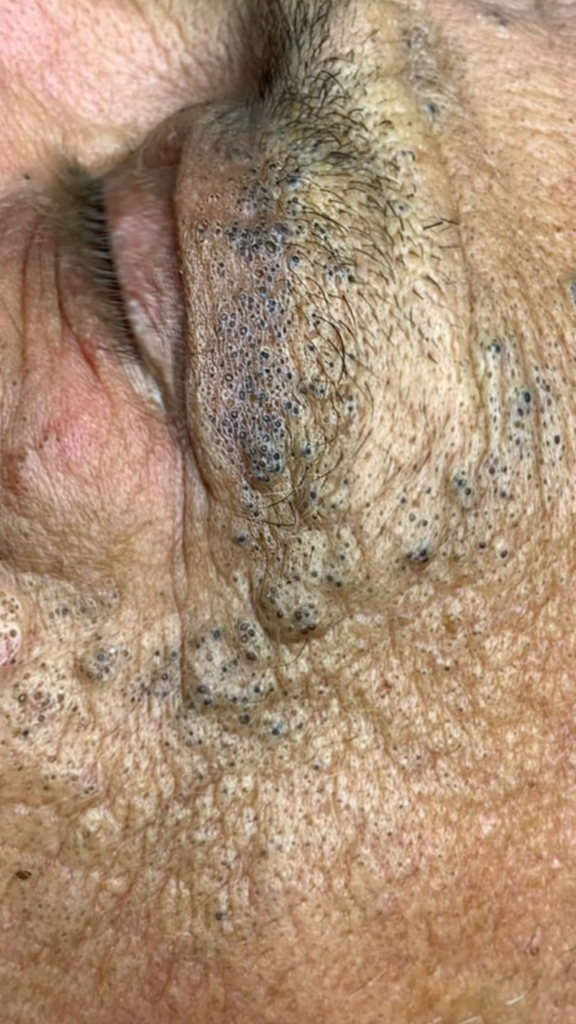
Acne around the eyes can be frustrating and uncomfortable. The skin in this area is extremely delicate, much thinner than the skin on the rest of the face. Because of this, pimples, small bumps, and irritation around the eyes require special care. Using harsh acne treatments too close to the eyes can lead to redness, burning, and even eye damage. Fortunately, with the right approach, you can treat and prevent acne around the eyes safely and effectively.
Understanding Acne Around the Eyes
Many people notice small pimples, whiteheads, or bumps near the eyelids, under the eyes, or at the outer corners. While these may look like typical acne, they can have several different causes.
Common causes include:
- Excess oil production
- Clogged pores
- Makeup residue
- Eye creams that are too heavy
- Dirty makeup brushes
- Hormonal changes
- Stress
- Poor sleep
- Allergic reactions
- Milia (tiny white keratin-filled cysts)
Sometimes, what appears to be acne is actually milia. Milia are small, hard, white bumps that form when dead skin cells become trapped under the skin. Unlike acne, they cannot be squeezed out easily and often require professional treatment.
Why the Eye Area Is So Sensitive
The skin around the eyes is among the thinnest on the body. It contains fewer oil glands and is more prone to irritation. Products containing strong ingredients such as salicylic acid, benzoyl peroxide, and retinoids can cause severe dryness and irritation if applied too close to the eyes.
That is why acne treatment in this area should be gentle and targeted.
Common Causes of Pimples Around the Eyes
1. Makeup Buildup
Concealer, eyeliner, mascara, and eyeshadow can clog pores if not removed properly. Sleeping with makeup on increases the risk of breakouts.
2. Heavy Eye Creams
Rich creams containing oils and waxes may block pores, especially if you have oily or acne-prone skin.
3. Dirty Pillowcases
Oil, sweat, and bacteria accumulate on pillowcases and transfer to your skin.
4. Hormonal Changes
Hormonal fluctuations during puberty, menstruation, pregnancy, or stress can increase oil production.
5. Touching the Face Frequently
Hands carry dirt and bacteria that can trigger breakouts.
6. Poor Diet and Dehydration
Excess sugar, processed foods, and inadequate water intake may worsen acne in some people.
Safe Ways to Treat Acne Around the Eyes
Gentle Cleansing
Wash your face twice daily with a mild, fragrance-free cleanser. Be careful around the eyes and avoid rubbing.
Warm Compress
Apply a warm compress for 5–10 minutes. This helps reduce inflammation and may loosen clogged pores.
Spot Treatment (With Caution)
Use acne treatments only on the affected area and keep them away from the lash line and eyes.
Helpful ingredients include:
- Sulfur
- Niacinamide
- Azelaic acid
- Low-strength salicylic acid (used carefully)
Non-Comedogenic Moisturizer
Choose lightweight products labeled “non-comedogenic,” meaning they do not clog pores.
Sunscreen
Daily sunscreen protects healing skin and helps prevent post-acne dark marks. Use a gentle mineral sunscreen suitable for sensitive skin.
Home Remedies That May Help
Some natural remedies can soothe minor acne, but they should be used carefully.
Aloe Vera
Aloe vera has calming and anti-inflammatory properties.
Green Tea Compress
Cooled green tea bags may reduce redness and swelling.
Honey
Raw honey has antibacterial properties, but it should be used cautiously and kept away from the eyes.
Always patch-test natural remedies before applying them.
What to Avoid
Avoid these common mistakes:
- Popping or squeezing pimples
- Using harsh scrubs
- Applying toothpaste
- Overusing strong acne medications
- Sleeping with makeup on
- Sharing makeup products
Popping pimples near the eyes can cause infection and scarring.
Best Ingredients for Sensitive Skin
If you are prone to irritation, look for these gentle ingredients:
- Niacinamide
- Azelaic acid
- Ceramides
- Hyaluronic acid
- Zinc
These help reduce inflammation and support the skin barrier.
Preventing Future Breakouts Around the Eyes
Remove Makeup Every Night
Use a gentle makeup remover or micellar water.
Clean Makeup Brushes
Wash brushes and sponges at least once a week.
Replace Eye Makeup Regularly
Mascara and eyeliner should be replaced every three to six months.
Avoid Oily Products
Use lightweight, oil-free moisturizers and sunscreens.
Change Pillowcases Often
Replace them every two to three days if you are acne-prone.
Manage Stress
Stress can trigger hormonal changes that worsen acne.
Eat a Balanced Diet
Focus on fruits, vegetables, lean proteins, and plenty of water.
When It Might Not Be Acne
Some eye-area bumps are not acne.
Milia
Tiny, hard white bumps that do not respond to acne treatments.
Styes
Painful red lumps on the eyelid caused by blocked glands.
Allergic Reactions
Itchy, red bumps after using new products.
Syringomas
Benign sweat gland growths, often requiring dermatologic treatment.
If you are unsure what the bumps are, consult a dermatologist.
When to See a Doctor
Seek professional help if:
- Bumps persist for several weeks
- The area becomes painful or swollen
- Vision is affected
- Over-the-counter treatments do not work
- You suspect milia or a stye
A dermatologist or ophthalmologist can diagnose the issue and recommend safe treatment.
Professional Treatments
Doctors may offer:
- Extraction of milia
- Prescription creams
- Chemical peels
- Laser therapy
- Cortisone injections for inflamed acne
These treatments should only be performed by qualified professionals.
Daily Skincare Routine for Acne Around the Eyes
Morning
- Gentle cleanser
- Lightweight moisturizer
- Mineral sunscreen
Evening
- Remove makeup thoroughly
- Gentle cleanser
- Spot treatment (away from the eyes)
- Moisturizer
Consistency is key. Results usually take several weeks.
How Long Does It Take to Heal?
Mild breakouts may improve within one to two weeks. More persistent acne or milia can take longer and may require professional treatment.
Conclusion
Acne around the eyes is common, but it must be treated with extra care because the skin is highly sensitive. Gentle cleansing, non-comedogenic products, and cautious use of acne treatments can help clear breakouts safely. Avoid squeezing pimples and keep makeup and skincare products clean. If the bumps do not improve or you are unsure whether they are acne, milia, or another condition, consult a dermatologist.
With patience and the right routine, you can achieve clearer, healthier skin around your eyes.