
Introduction
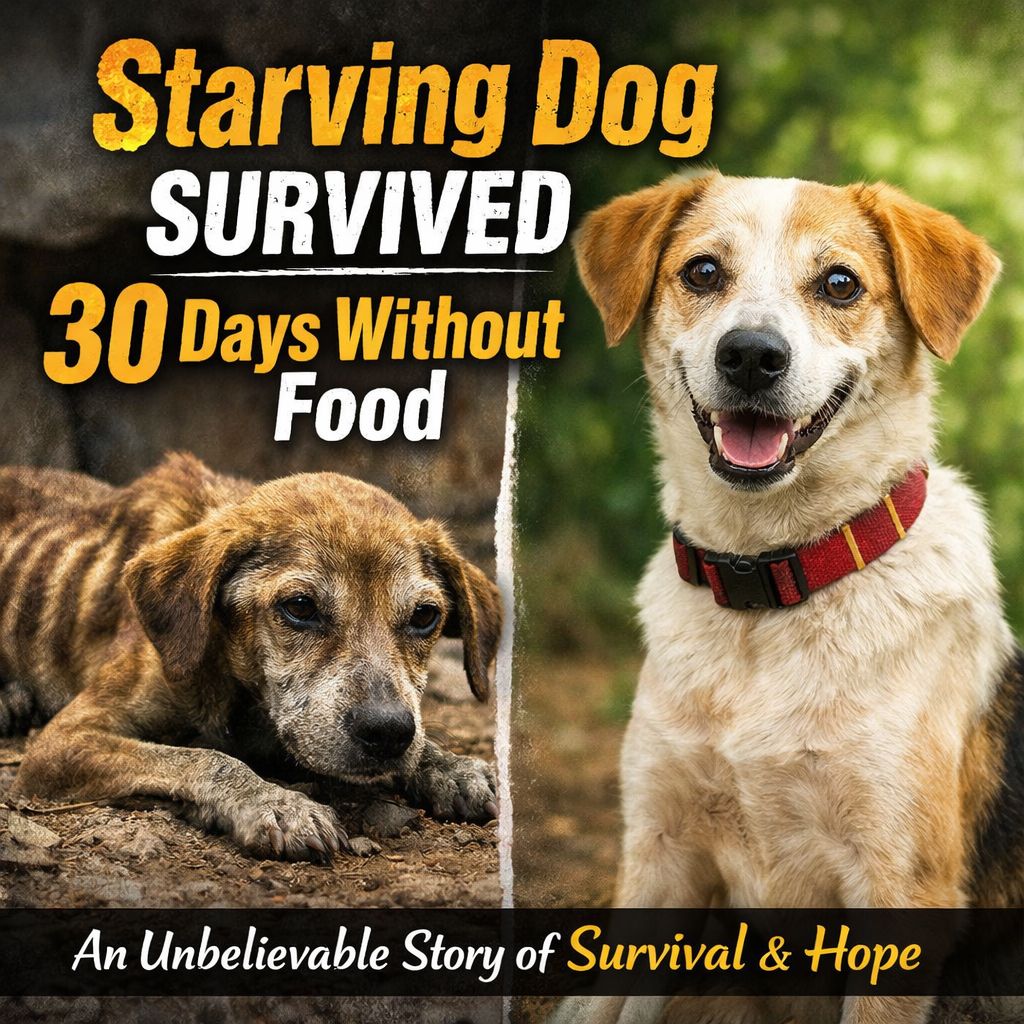
A starving dog surviving 30 days without food sounds impossible, but survival stories like this remind us of the incredible strength animals possess. Across many cities and villages, stray dogs struggle daily to find food and clean water. Some are abandoned. Some are injured. Others are simply forgotten.
This article tells the powerful story of a dog who survived nearly a month without proper food. Along with the emotional journey, you will also learn how dogs survive starvation, what happens to their bodies during extreme hunger, and how to rescue and rehabilitate a severely malnourished dog safely.
The Shocking Discovery
In a quiet street, residents noticed a weak dog lying near a broken wall. His bones were clearly visible. His eyes were sunken. He barely had the strength to move. For almost 30 days, the dog had not eaten proper food. He survived only by drinking dirty water from puddles and occasionally licking scraps thrown on the ground.
People walked past him every day. Some felt sad. Some ignored him. But one day, a kind-hearted person decided enough was enough.
The dog was barely alive, but he was still breathing. That small sign meant hope.
Can a Dog Really Survive 30 Days Without Food?
Yes, but it is extremely dangerous.
Dogs can survive longer without food than without water. A healthy dog may survive around 3 to 5 days without food comfortably. In extreme cases, some dogs may survive 2–4 weeks depending on:
Body fat reserves
Access to water
Weather conditions
Overall health
Age
However, surviving does not mean staying healthy. During starvation, the dog’s body slowly breaks down muscle and fat for energy. Organs begin to weaken. The immune system collapses. The risk of death increases every single day.
Thirty days without proper food is life-threatening and often results in severe malnutrition.
What Happens to a Dog’s Body During Starvation?
1. First Few Days
The dog uses stored glucose for energy. Hunger increases, and weakness begins.
2. One Week
Fat reserves are used for survival. The dog loses visible weight. Energy levels drop significantly.
3. Two Weeks
Muscle breakdown begins. The ribs and spine become clearly visible. The dog becomes extremely weak.
4. Three to Four Weeks
Organ damage risk increases. The immune system becomes very weak. Infection risk becomes high.
In this case, the dog had reached a critical condition. His survival was a miracle.
The Rescue Moment
The rescuer carefully approached the dog. He did not bark. He did not run. He did not even lift his head properly.
A piece of soft bread soaked in water was offered. The dog slowly sniffed it. After a few minutes, he took a tiny bite. That small bite was the beginning of his recovery.
The rescuer did not feed him too much at once. Feeding a starving dog too quickly can cause a dangerous condition called refeeding syndrome, which can lead to organ failure.
The dog was gently wrapped in a cloth and taken to a local animal clinic.
Veterinary Care and Treatment
At the clinic, the vet confirmed severe malnutrition and dehydration. Treatment included:
IV fluids for hydration
Vitamin supplements
Small, frequent meals
Deworming medicine
Antibiotics (if infection present)
The first 48 hours were critical. The dog needed careful monitoring.
Recovery Process: Week by Week
Week 1 – Stabilization
The dog started eating small portions every 3–4 hours. His body slowly adjusted to food again.
Week 2 – Strength Returns
He could stand without falling. His eyes looked brighter. He wagged his tail slightly.
Week 3 – Weight Gain Begins
Muscle started to rebuild. His ribs were still visible, but he looked stronger.
Week 4 – Emotional Healing
He began trusting humans again. He responded to gentle touch.
Recovery from severe starvation takes months, not days. But survival itself is the biggest victory.
How to Help a Starving Dog Safely
If you ever find a starving dog, follow these steps:
1. Approach Calmly
Do not scare the dog. Move slowly and speak softly.
2. Offer Small Amounts of Soft Food
Give small portions of:
Boiled chicken (plain)
Rice mixed with broth
Soaked dog food
Never give large meals immediately.
3. Provide Clean Water
Hydration is critical.
4. Contact a Vet
Professional help is important in severe cases.
5. Monitor for Symptoms
Watch for:
Vomiting
Diarrhea
Weakness
Collapse
Seek emergency care if these appear.
Emotional Impact of Rescue
Rescuing a starving dog is not just about physical recovery. It is about restoring hope.
Many stray dogs suffer silently. When one is saved, it creates a powerful ripple effect. People become more aware. Children learn compassion. Communities grow kinder.
This dog, once close to death, became a symbol of survival and resilience.
Preventing Stray Dog Starvation
Here are simple ways communities can help:
Place water bowls outside during summer
Feed leftovers safely
Support local animal shelters
Encourage spaying and neutering
Report injured or starving animals
Small actions can save lives.
Lessons from This Story
Dogs are incredibly strong survivors.
Kindness can change a life.
Starvation is preventable with community awareness.
Rescue must be done carefully and responsibly.
The dog who survived 30 days without food teaches us that even in extreme suffering, life fights to continue.
Frequently Asked Questions (FAQ)
How long can a dog survive without food?
Most dogs can survive 3–5 days comfortably. In extreme conditions, some may survive 2–4 weeks, but this is life-threatening.
What should I feed a starving dog first?
Start with small amounts of soft, easy-to-digest food like boiled chicken and rice.
Can a starving dog fully recover?
Yes, with proper veterinary care, nutrition, and time, many dogs recover fully.
Is it dangerous to feed a starving dog too much?
Yes. Feeding too much too quickly can cause refeeding syndrome and serious complications.
Conclusion
A starving dog surviving 30 days without food is a heartbreaking yet inspiring story. It reminds us that animals depend on human compassion. Hunger is painful, but kindness is powerful.
If you ever see a starving dog, do not ignore it. Even a small effort — a bowl of water, a small meal, or a call to a local rescue — can save a life.
Because sometimes, survival begins with just one small bite of food and one act of kindness.