
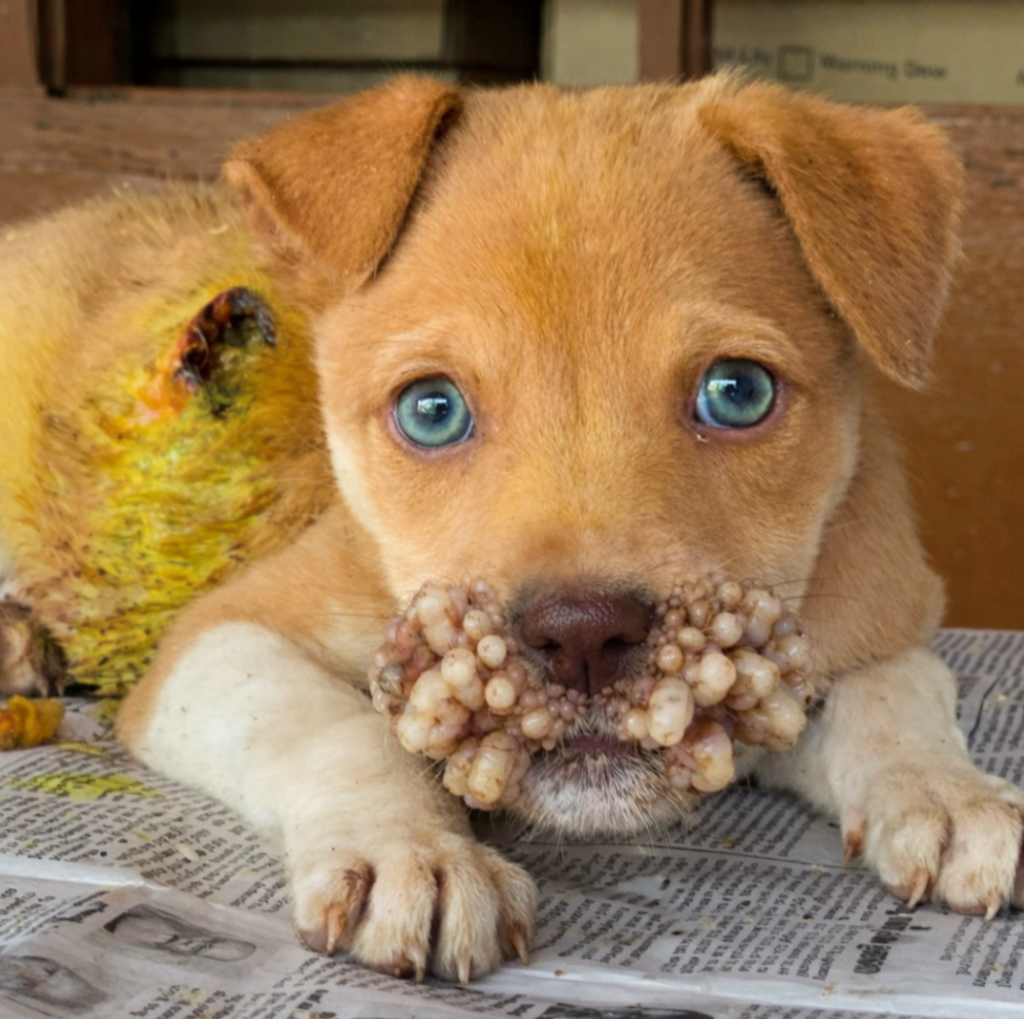
It was a scene that many would find difficult to even look at, let alone face. A helpless dog lay in silence, his body weak, his spirit fading, and his wound infested with maggots. The smell of infection hung in the air, and the sight of tiny larvae moving inside an open hole in his flesh was heartbreaking. Yet, despite the horror of the situation, this was not the end of his story—it was the beginning of a painful but powerful journey toward survival.
The dog had likely been suffering for days, maybe even weeks. Stray dogs often endure injuries without any form of medical care, and when wounds are left untreated, they become breeding grounds for flies. These flies lay eggs in open sores, and within a short time, those eggs hatch into maggots. The maggots begin feeding on dead and sometimes living tissue, causing immense pain and accelerating the infection. This condition, known as myiasis, can quickly become life-threatening if not treated in time.
When rescuers first noticed the dog, he was lying in a quiet corner, barely moving. His eyes reflected exhaustion and silent suffering. He did not bark or try to run away; instead, he seemed to have accepted his fate. But one thing was clear—he was still alive, and as long as there was life, there was hope.
Approaching the dog required patience and care. Injured animals are often scared and may react defensively, even when help is being offered. However, this dog was too weak to resist. He allowed the rescuers to come close, as if he understood they were there to help. Gently, they examined the wound and realized the severity of the situation. The hole in his body was deep, and maggots had spread inside it.
The first step in saving his life was to remove the maggots. This is a delicate and time-consuming process that requires both courage and compassion. Using medical tools and sometimes even bare hands protected with gloves, rescuers began carefully extracting each maggot from the wound. It was not an easy task. The dog flinched in pain, but he did not fight back. It was as though he trusted them completely.
Each maggot removed was a small victory. The process took a long time because missing even a few could allow the infestation to continue. In some cases, antiseptic solutions are used to flush out hidden larvae, ensuring that the wound is completely clean. The rescuers worked with determination, knowing that this painful procedure was the only way to give the dog a chance to live.
After all visible maggots were removed, the wound was thoroughly cleaned using antiseptic solutions. This step is crucial to prevent further infection. The dog was then given medication—antibiotics to fight infection and painkillers to ease his suffering. In severe cases like this, veterinary care is essential, and the dog was taken to a clinic where professionals could continue his treatment.
The days that followed were critical. Recovery from such a condition is not immediate. The dog needed proper nutrition, clean shelter, and ongoing medical care. His wound had to be cleaned regularly, and dressings had to be changed to promote healing. At first, he was too weak to even stand, but slowly, signs of improvement began to appear.
His eyes, once dull and lifeless, started to regain a spark. He began to respond to the presence of his caregivers. He ate small amounts of food, which gradually increased as his strength returned. Each day brought a new sign of hope. The wound, which once seemed unbearable to look at, began to heal. Fresh tissue replaced the damaged area, and the risk of infection slowly decreased.
But healing is not just physical—it is emotional too. Dogs are sensitive creatures, and trauma can leave lasting effects. This dog had experienced immense pain and neglect, yet he showed an incredible ability to trust again. He wagged his tail when he saw the people who had helped him. He leaned into their touch, seeking comfort and reassurance. It was a reminder that even in the darkest situations, kindness can rebuild what suffering has broken.
This story is not just about one dog; it is about the reality faced by countless stray animals around the world. Many suffer in silence, their injuries unnoticed and untreated. Lack of awareness, resources, and compassion often leads to unnecessary suffering. However, stories like this show that even a single act of kindness can make a life-saving difference.
Removing maggots from a wound may seem like a small action, but in reality, it is an act of courage and humanity. It requires people to step beyond their comfort zones and confront a painful reality. It is not easy to see an animal in such a condition, but turning away only allows the suffering to continue.
There is also an important lesson here about responsibility. As humans, we share this world with animals, and their well-being is connected to our actions. Stray animals often become victims of neglect, accidents, and harsh environments. Providing basic care, supporting animal rescue organizations, and spreading awareness can help reduce such cases.
Education plays a key role in preventing situations like this. People need to understand the importance of treating wounds promptly, whether in pets or stray animals. Simple steps like cleaning an injury and seeking veterinary help can prevent severe complications like maggot infestations. Communities can also work together to create safer environments for animals, ensuring they have access to food, water, and medical care.
As for the dog, his journey did not end with survival—it transformed into a story of hope. With time, his wound healed completely. His strength returned, and he was no longer the weak, suffering animal he once was. He became active, playful, and full of life. Eventually, he found a safe place where he could live without fear and pain.
Looking at him, it was hard to believe he was the same dog who had once been on the brink of death. His transformation was nothing short of remarkable. It was a testament to the power of compassion and the resilience of life.
In the end, this story reminds us of a simple but powerful truth: every life matters. No matter how small or helpless a creature may seem, it deserves care, respect, and a chance to live. The act of removing maggots from a wound was not just a medical procedure—it was an act of saving a life, of choosing kindness over indifference.
And sometimes, that choice is all it takes to turn suffering into survival, and despair into hope.