
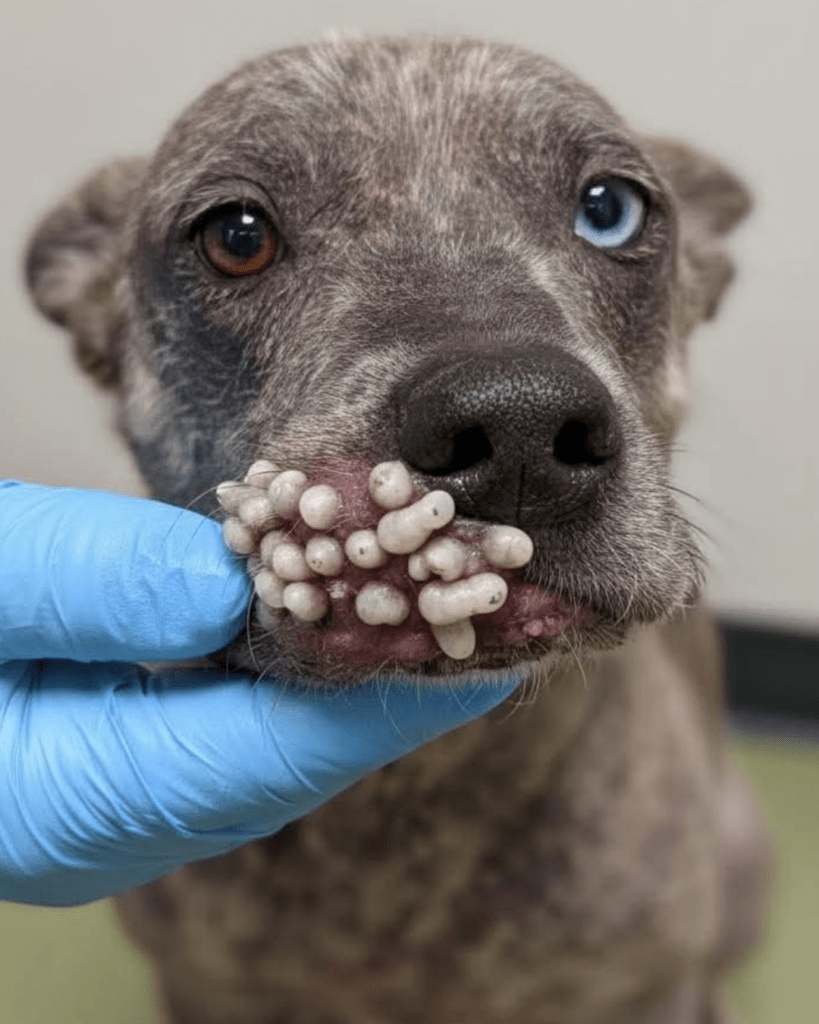
He was not always like this. Once, he was a normal, happy dog who ran freely in the streets, wagged his tail at every human, and trusted the world without fear. But everything changed when a painful disease slowly took over his face. What started as a small infection turned into something terrible. His face became swollen, wounded, and unrecognizable. The pain was unbearable, but what hurt him even more was the way people started treating him.
Instead of helping, people laughed. They pointed at him, made fun of his face, and walked away as if he didn’t matter. Some even threw stones to chase him away. He didn’t understand why. Inside, he was still the same innocent dog, still full of love, still hoping someone would show him kindness. But to humans, his face had made him “ugly,” and that was enough for them to ignore his suffering.
If he could speak, maybe he would ask, “Why are you laughing at me? Did I choose this pain? Did I choose to look like this?” His silent cries echoed in empty streets, but no one listened. Every laugh felt like a wound deeper than the disease itself. Physical pain can sometimes be healed, but the pain of rejection breaks the soul.
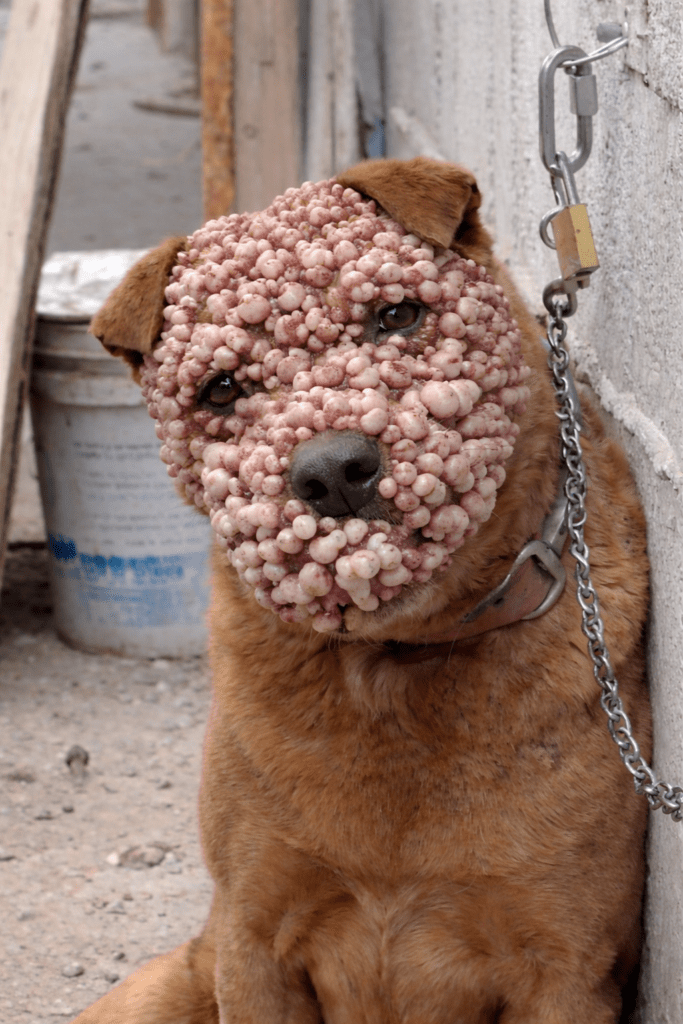
Days turned into nights, and nights turned into endless suffering. He could barely eat because of the wounds on his face. Flies gathered around him, making his condition even worse. The infection spread, and his body grew weaker. People avoided him because of his appearance and the smell of his wounds. He was left alone, hungry, in pain, and completely forgotten.
His heart was full of complaints—not just about one person, but about humanity itself. “Why do you only love what looks beautiful? Why do you turn away from those who need you the most? Why does my pain make you laugh instead of making you care?” These questions remained unanswered as he continued to suffer on the streets.
But just when it seemed like there was no hope left, something changed. A rescue team found him. Unlike others, they didn’t laugh. They didn’t step back in disgust. They saw his pain, not his appearance. They saw a life that needed saving. Slowly and gently, they approached him. At first, he was scared. After everything he had been through, trusting humans again was not easy. But there was something different about them—something kind.
They picked him up carefully and took him for treatment. For the first time in a long time, he felt safe. Doctors examined him and started his treatment immediately. His condition was serious, but the rescue team didn’t give up. They cleaned his wounds, gave him medicine, and stayed by his side. Day by day, his body started to heal.
But the real healing happened in his heart. The same dog who once cried alone began to feel love again. He started eating properly. He slowly began to wag his tail. Trust, which was once broken, started to return. He realized that not all humans are cruel—some still care.
As time passed, his wounds improved. His face, though still scarred, no longer carried the same pain. His eyes, once filled with sadness, now showed a little hope. He was no longer alone. He was no longer unwanted. He had found people who accepted him as he was.
Still, his story leaves behind an important message. It reminds us of how easily we judge based on appearance and how quickly we forget compassion. That dog didn’t need laughter—he needed help. He didn’t need rejection—he needed love.
Today, he is safe, healing, and surrounded by care. But his silent complaint still lingers in the air: “Why did you laugh when I was in pain?” It is a question every human should think about. Because true humanity is not shown in how we treat the perfect and beautiful, but in how we treat the broken and suffering.
Let this story be a reminder to choose kindness. Because for someone out there, even a small act of care can mean the difference between life and death.