
Introduction
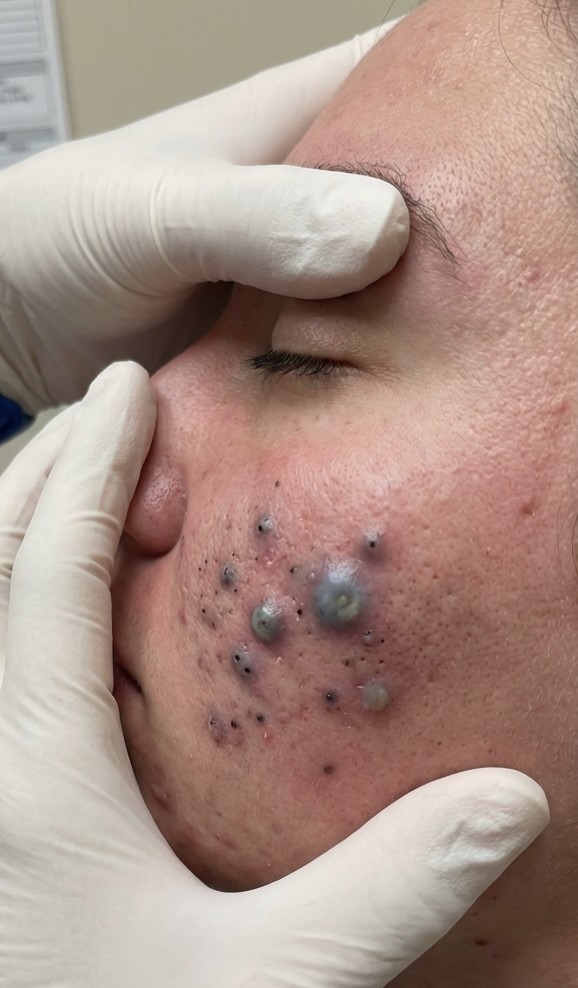
Acne is one of the most common skin conditions worldwide, but in some cases, it becomes severe, painful, and difficult to manage. The image above shows an example of advanced acne, where multiple inflamed cysts and pustules appear clustered on the cheek. This type of acne not only affects physical appearance but can also impact confidence and emotional well-being.
Understanding the causes, treatment options, and prevention methods is essential to manage severe acne effectively and achieve healthier skin.
What is Acne?
Acne is a skin condition that occurs when hair follicles become clogged with oil (sebum), dead skin cells, and bacteria. It can appear in different forms, including:
- Whiteheads
- Blackheads
- Pimples
- Nodules
- Cysts
The image represents cystic acne, the most severe type, characterized by large, painful, pus-filled lumps deep under the skin.
Causes of Severe Acne
Severe acne does not happen overnight. It develops due to multiple underlying factors:
1. Excess Oil Production
The skin produces oil naturally, but when it becomes excessive, it clogs pores and creates an environment for bacteria to grow.
2. Bacterial Infection
A bacteria called Propionibacterium acnes (now known as Cutibacterium acnes) plays a major role in inflamed acne.
3. Hormonal Changes
Hormonal fluctuations—especially during puberty, stress, or hormonal disorders—can trigger severe breakouts.
4. Genetics
If your parents had severe acne, you are more likely to experience it too.
5. Poor Skincare Routine
Using harsh products or not cleansing properly can worsen acne.
6. Diet and Lifestyle
High sugar intake, dairy products, and stress may contribute to acne severity.
Types of Acne Seen in the Image
The image shows multiple forms of acne, including:
1. Cystic Acne
Large, painful, pus-filled lumps deep in the skin.
2. Nodular Acne
Hard, inflamed bumps without visible pus.
3. Blackheads
Small dark spots caused by clogged pores exposed to air.
4. Pustules
Red bumps filled with white or yellow pus.
This combination indicates severe inflammatory acne, which requires proper medical attention.
Why You Should Not Squeeze Acne
In the image, a gloved hand appears to be applying pressure to the skin. While extraction is sometimes done by professionals, squeezing acne at home can:
- Spread bacteria
- Cause deeper infection
- Lead to permanent scars
- Increase inflammation
It is always safer to consult a dermatologist before attempting any extraction.
Best Treatments for Severe Acne
Treating severe acne requires a combination of medical and skincare approaches:
1. Topical Treatments
- Benzoyl peroxide
- Retinoids
- Salicylic acid
These help reduce oil, kill bacteria, and unclog pores.
2. Oral Medications
Doctors may prescribe:
- Antibiotics
- Hormonal therapy
- Isotretinoin (for very severe cases)
3. Professional Procedures
- Chemical peels
- Laser therapy
- Acne extraction by professionals
4. Skincare Routine
A simple daily routine can make a big difference:
Morning:
- Gentle cleanser
- Oil-free moisturizer
- Sunscreen
Night:
- Cleanser
- Treatment cream
- Moisturizer
Natural Remedies (Supportive, Not Primary Treatment)
While medical treatment is important, some natural remedies can support healing:
- Aloe vera (reduces inflammation)
- Tea tree oil (antibacterial)
- Honey (soothing effect)
However, these should not replace professional treatment for severe acne.
Acne Scars and How to Prevent Them
Severe acne often leads to scars if not treated properly. To prevent scarring:
- Avoid picking or squeezing pimples
- Start treatment early
- Use sunscreen daily
- Follow dermatologist advice
Diet Tips for Clear Skin
Your diet plays a role in skin health. Consider:
Foods to Eat:
- Fruits and vegetables
- Whole grains
- Omega-3 rich foods (fish, nuts)
Foods to Avoid:
- Sugary snacks
- Fast food
- Excess dairy
Mental and Emotional Impact of Acne
Severe acne can affect more than just your skin. Many people experience:
- Low confidence
- Anxiety
- Social withdrawal
It’s important to remember that acne is treatable, and seeking help is the first step toward improvement.
When to See a Doctor
You should consult a dermatologist if:
- Acne is painful and severe
- Over-the-counter treatments are not working
- Scars are forming
- Acne affects your confidence
Early treatment can prevent long-term damage.
Prevention Tips
To reduce future breakouts:
- Wash your face twice daily
- Avoid touching your face
- Use non-comedogenic products
- Keep your pillowcases clean
- Manage stress
Conclusion
Severe acne, like the one shown in the image, is a serious skin condition that requires proper care and attention. While it may look alarming, effective treatments are available. By understanding the causes, avoiding harmful habits like squeezing, and following a proper skincare routine, you can significantly improve your skin health.
If your acne is severe or persistent, don’t hesitate to seek professional help. Healthy, clear skin is achievable with the right approach and consistency.