
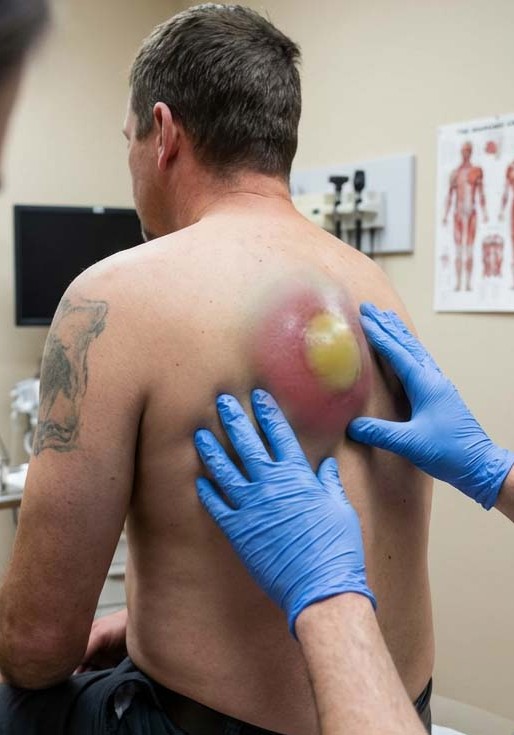
A painful swelling on the skin can be more than just a minor irritation—it can be a serious medical condition known as a skin abscess. The image above shows a large, inflamed abscess on a man’s upper back, being examined by a healthcare professional. This condition, while common, can become dangerous if ignored or treated improperly. In this article, we will explore what a skin abscess is, why it happens, its symptoms, treatment options, and how you can prevent it.
What is a Skin Abscess?
A skin abscess is a localized collection of pus that forms within the skin due to infection. It often appears as a swollen, red, and painful lump. The center of the abscess may turn yellow or white as pus accumulates beneath the surface. This pus is made up of dead tissue, bacteria, and white blood cells that fight infection.
Abscesses can develop anywhere on the body but are commonly found on the back, neck, face, and buttocks. In the image, the abscess is quite large and inflamed, indicating that the infection has progressed significantly.
Causes of Skin Abscess
The most common cause of a skin abscess is a bacterial infection. Bacteria can enter the body through small cuts, hair follicles, or blocked sweat glands. Once inside, they multiply and trigger the body’s immune response, leading to the formation of pus.
Some common causes include:
- Poor hygiene
- Ingrown hairs
- Blocked oil glands
- Minor skin injuries
- Weakened immune system
Certain bacteria, especially Staphylococcus aureus, are often responsible for these infections. In some cases, more resistant strains like MRSA (Methicillin-resistant Staphylococcus aureus) can cause severe abscesses.
Symptoms of a Skin Abscess
A skin abscess usually starts as a small, tender lump and gradually becomes larger and more painful. Common symptoms include:
- Redness and swelling
- Warmth around the affected area
- Pain or tenderness
- A visible pus-filled center (yellow or white)
- Fever (in severe cases)
- Fatigue or general discomfort
In the image, the swelling is clearly inflamed and has a yellow center, indicating pus accumulation. This stage often requires medical attention.
Why You Should Not Ignore It
Ignoring a skin abscess can lead to serious complications. As the infection spreads, it can affect surrounding tissues or even enter the bloodstream, causing a life-threatening condition known as sepsis.
Some risks of untreated abscess include:
- Spread of infection
- Tissue damage
- Formation of multiple abscesses
- Fever and systemic illness
Therefore, timely treatment is very important.
Treatment Options
The treatment of a skin abscess depends on its size and severity. Small abscesses may heal on their own, but larger ones, like the one shown in the image, often require medical intervention.
1. Warm Compress
Applying a warm compress several times a day can help the abscess come to a head and drain naturally. This is usually effective for small abscesses.
2. Drainage (Incision and Drainage)
For larger abscesses, a doctor may perform a minor surgical procedure to drain the pus. This involves making a small cut in the abscess to release the infection. The image suggests that the person may be about to undergo this procedure.
3. Antibiotics
In some cases, especially if the infection is severe or spreading, doctors prescribe antibiotics to fight the bacteria.
4. Pain Relief
Over-the-counter pain relievers can help manage discomfort during the healing process.
Home Care Tips
If you have a mild abscess, you can take care of it at home with proper hygiene and care:
- Keep the area clean and dry
- Avoid squeezing or popping the abscess
- Wash hands before and after touching the area
- Use clean bandages to cover it
- Apply warm compress regularly
However, if the abscess grows larger, becomes extremely painful, or causes fever, seek medical help immediately.
Prevention of Skin Abscess
Preventing abscesses is easier than treating them. Here are some simple steps you can follow:
- Maintain good personal hygiene
- Clean any cuts or wounds immediately
- Avoid sharing personal items like towels or razors
- Wear clean clothes
- Strengthen your immune system with a healthy diet
People with diabetes or weakened immunity should be extra careful, as they are more prone to infections.
When to See a Doctor
You should consult a doctor if:
- The abscess is larger than 1 cm
- Pain becomes severe
- You develop a fever
- The infection spreads
- It does not heal within a few days
The image clearly shows a severe abscess that requires professional care. The presence of medical gloves suggests that a healthcare provider is already involved, which is the right step.
Emotional and Physical Impact
A skin abscess is not just physically painful—it can also affect a person emotionally. The discomfort, appearance, and fear of infection can cause stress and anxiety. Early treatment can help reduce both physical and emotional burden.
Conclusion
A skin abscess is a common but potentially serious condition that should never be ignored. The image highlights a severe case where medical attention is necessary. Understanding the causes, symptoms, and treatment options can help you act quickly and prevent complications.
Always remember: never try to pop a large abscess yourself. Proper medical care ensures safe healing and reduces the risk of infection spreading. Take care of your skin, maintain hygiene, and seek help when needed to stay healthy and safe.